From commitment to collective capacity
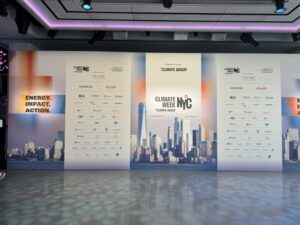
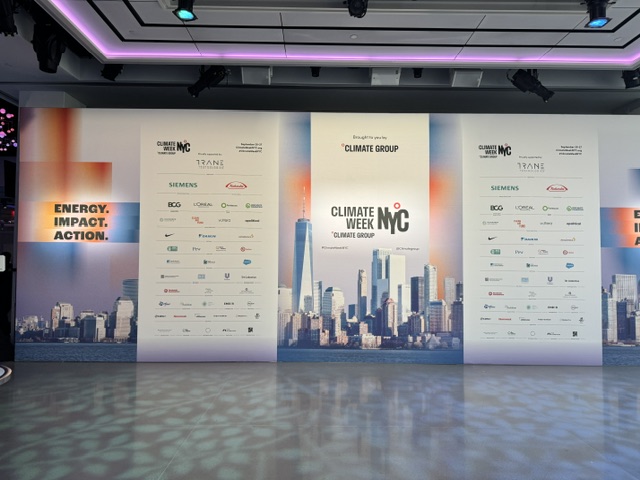
Extreme heat was one of the discussions that resonated with me after two days at Climate Week NYC Hub Live 2026. The session connected heat to workers, infrastructure, supply chains, and the systems businesses rely on. It made me think beyond an immediate response to the next hot day. If heat is changing the conditions in which people live and work, how are leaders preparing their organizations for it over time?
That is where stewardship begins for me. We have inherited an earth on which people live, work, and build their futures. Caring for it calls for more than a commitment to do better. It calls for systems capable of carrying that commitment into the decisions that affect people’s lives.
Across the talks I attended, leaders shared examples of progress in buildings, energy, supply chains, and other sectors. I also heard recurring questions about resilience, the cost of inaction, and the infrastructure needed to support change. The examples differed, but they led me to one execution question: What must be designed and coordinated so that climate commitments can be delivered?
Four questions that move the dialogue forward
As I made sense of what I heard, I began distinguishing readiness, action, robustness, and resilience:
| Lens | Question |
| Readiness | What needs to be in place before conditions change? |
| Action | What are we doing now to advance the commitment? |
| Robustness | Can what we build continue to function under stress? |
| Resilience | Can we adapt and recover when conditions exceed the plan? |
These are not four stages that every organization follows in order. They are four ways to test whether a commitment is becoming a capability. Applied to extreme heat, they move the discussion beyond recognition of the risk. They ask what has been prepared, what has changed in practice, and what will hold up, and what the organization can do when its first response is insufficient.
The answers will vary by sector. A common playbook should provide shared questions and decision logic, while allowing different organizations to determine the steps their circumstances require.
Climate action crosses organizational boundaries
Another idea repeated in my notes is collaboration. I heard examples involving suppliers, coalitions, collective learning, and new partnerships. Those examples matter because no organization controls every part of the system on which its climate commitments depend.
The discussion of electric and autonomous vehicles made that visible in a different way. Federal clean vehicle purchase credits have ended for vehicles acquired after September 30, 2025, yet the work of building EV infrastructure continues. California continues to invest in charging, while companies such as Voltera are developing facilities to support electric and autonomous fleets. The vehicle is only one part of the transition. Places to charge, available power, dependable operations, and the ability to serve fleets at scale also have to be built.
That example held my attention because policy can change while the underlying execution challenge remains. Organizations still have to decide what to build, which partners they depend on, and whether the infrastructure can support the future they envision. A shared direction toward net zero and greater use of renewable energy helps align the work. It does not make those decisions for us.
Climate leadership also means looking closely at slow progress. What is holding up the transition: a constraint in the system, a dependency between organizations, or a competing business priority? The cost of inaction matters, but naming the constraint gives leaders a place to act.
Sustainability belongs in the business
Sustainability belongs in the business
Sustainability must be anchored in the business, rather than treated as an isolated initiative. Decisions about investment, operations, and suppliers shape whether a climate commitment can be fulfilled. Climate leadership brings the commitment into those decisions instead of leaving it with one team to advance on its own.
My project leadership lens begins with three levels of analysis:
Policy: What rules, incentives, and uncertainties are shaping the decision?
Industry: How are infrastructure, markets, technology, and supply chains changing what is possible?
Organization: What must we and our partners become capable of doing?
These questions do not replace the work of climate scientists, engineers, policy experts, or the communities affected. They help connect that work to decisions, ownership, resources, and results.
Bring the commitment down to ground level
Within the policy, industry, and organization lenses, leaders can weigh seven questions according to the commitment in front of them:
External pressure: What is changing that the organization cannot ignore?
Industry implication: How is this changing the economics, expectations, or competitive environment?
Organizational implication: What must the organization do differently?
Capability gap: What does the organization not yet do reliably enough?
Decision posture: Is this offense, defense, a no-regret move, or an option bet?
Trigger: What future signal would change the decision?
Outcome: What measurable business or sustainability outcome should improve if the response works?
Their relative importance will differ by sector and by commitment. The point is to identify what matters most now: where progress is constrained, what decision is needed, who must participate, and how leaders will know whether their response is working.
Resilience is not a response. It’s a foundation to be built on. To steward climate commitments forward, we must design and distribute the capacity to fulfill them.
If your organization needs help shaping a climate-related strategy into an executable plan, contact Makoway Consulting.